
What Plant Studio Landscape Design Looks Like from First Walk to Final Plan
We believe a great landscape begins on paper. Not in a catalog, not in a Pinterest board, not in three separate trips to a garden center across one spring. A property that is going to look like one place, age into itself, and still make sense in ten years is a property that was designed before it was built.
That is the order most homeowners do not get. The lawn comes in first. The patio comes a few years later. A bed gets added when there is room in the budget. A tree gets planted because somebody at the nursery said it would do well. After a decade the property is a list of pieces. The pieces work individually. They do not work together.
I am Josh Perkins, Landscape Architect, and I run the design side at Plant Studio Landscape’s Muncie design office. What follows is how I think about the work, where I see properties go sideways without a plan, and what I will and will not design for an East Central Indiana property.
Why Most Properties Need a Plan Before a Plant
Most of the properties I walk for the first time were built in pieces. The piece order was decided by whoever was selling the next thing. A deck contractor, a tree service, a sod-only crew, a fence company. None of the decisions were wrong on their own. The patio was a good patio. The trees were good trees. The grading the deck contractor did to set his patio worked for the patio.
The properties still struggle. The patio drains toward the new shade tree. The shade tree gets shaded out by another tree planted three years later. The driveway approach was widened, which means the front bed that used to feel like an entrance now feels like a leftover. A plan is what keeps a property from arriving in that state ten years from now. It is the document that lets every later decision know what came before it and what is supposed to come after.
The argument against making a plan first is usually that planning costs money before anything visible has happened. It does. The plan also costs less than the second crew that has to be brought in three years later to fix what the first crew installed in the wrong order. I have not yet met a property where the up-front plan cost more than the cost of building without one.
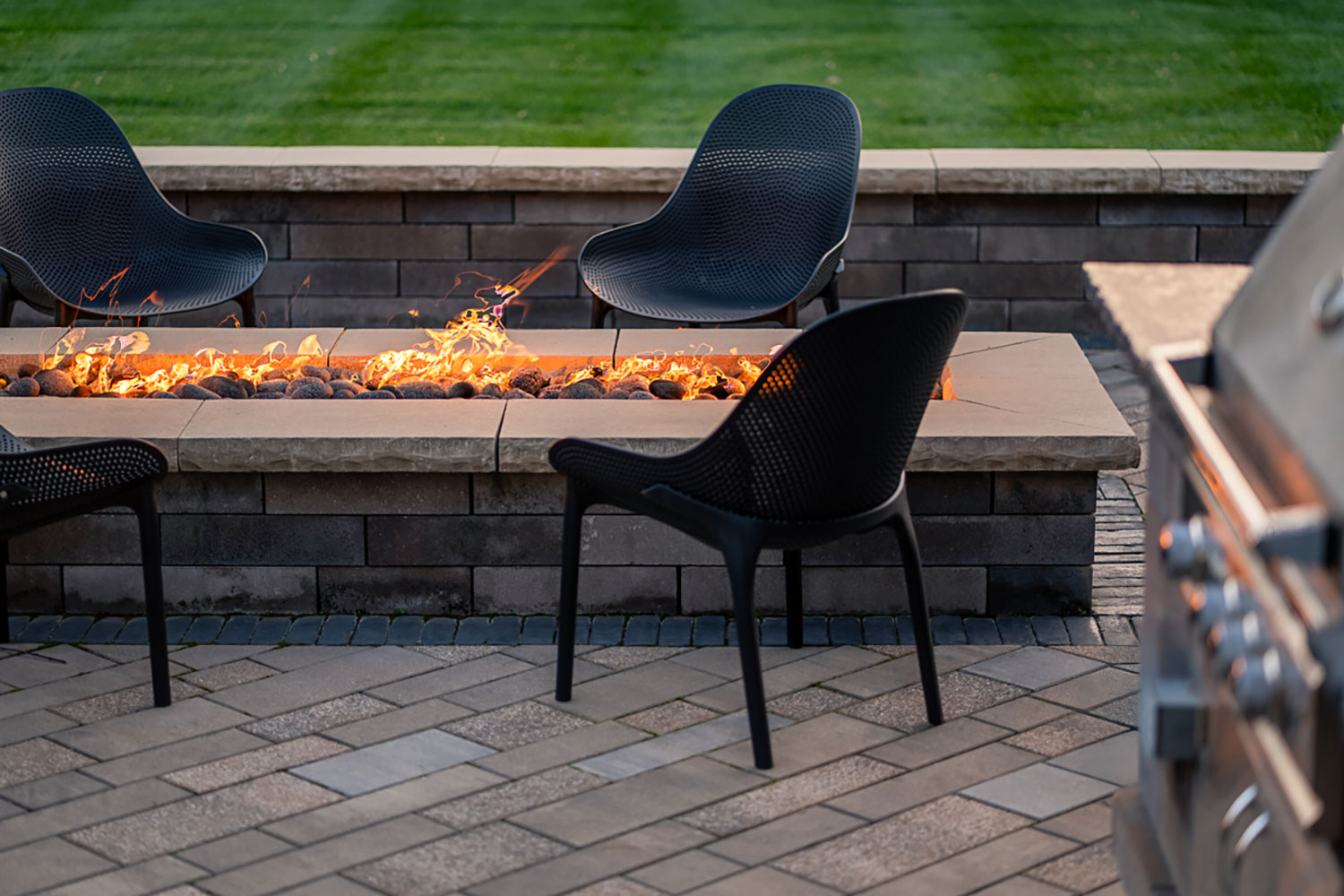
What I Walk a Muncie Property For Before I Draw
A first property walk is the most important hour of the project. I am not measuring anything yet, and I am not putting plants anywhere. I am reading the lot.
I walk for grade first. Where the property falls, where it stays flat, where the natural drainage line is that the property has been telling water to follow whether anyone drew it or not. In East Central Indiana the grade question is heavier than people realize, because the soil is clay-heavy enough that the property will hold water for days where the grade is wrong. Beds in those spots will fail no matter what plant goes in.
I walk for sun. Where the morning light hits. Where the afternoon shade falls in July and where it falls in October. Properties out by Mounds State Park or the wooded subdivisions off State Road 28 sit in a sun pattern that nothing in a catalog will tell you to design for. The walk is when I see it.
I walk for what is already worth keeping. A mature oak in the back. A row of viburnum that the previous owner planted twenty years ago and that still does its job. A grade transition where the slope sits naturally. I would rather design around something good than draw over it.
And I walk for what the homeowner actually does outside. Where the kids end up in summer. Where the dog wears the path. Where the morning coffee chair has sat for ten years. The property’s lived geography is part of the design brief. Anything I draw that ignores it will get ignored back.
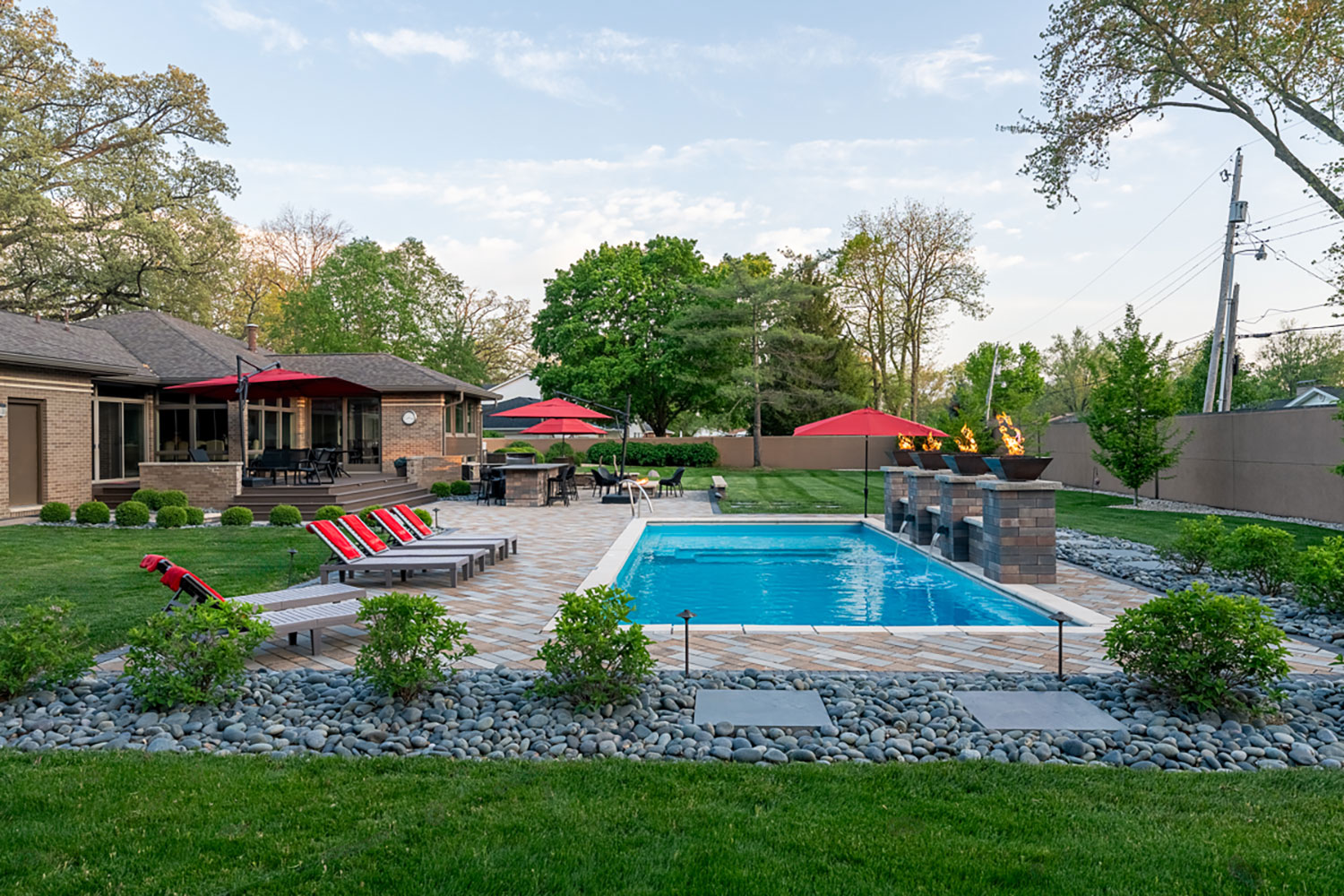
What I Will Not Design For an East Central Indiana Property
There are designs I will not produce, no matter how much a homeowner has seen them somewhere else and wants them.
I will not design a property around plant material that does not survive our zone. East Central Indiana sits in USDA Zone 5b through 6a depending on which side of Muncie you are on. Anything specified for Zone 7 and warmer will look right for a season and fail in the first hard winter. A landscape designed for a Charlotte or Nashville property is not the landscape I will draw for a Yorktown one, even if the homeowner moved here from there and wants to bring the look.
I will not design hardscape laid on a base the freeze-thaw cycle here can lift. I have walked too many patios and walks that were installed by out-of-area contractors over four inches of base and lifted within two winters. The frost depth in East Central Indiana is real. The hardscape spec has to be drawn for the depth, not for the picture.
I will not design around a single tree species, or two species, in any quantity that one disease year could wipe out. The mid-2000s emerald ash borer years taught the Midwest landscape industry that lesson once already. Designs that lean heavily on any one species, even native ones, get a second species mixed into the planting framework before they leave my drafting table.
And I will not design a property that needs more maintenance than the homeowner has told me they can give it. A beautiful design that fails because nobody had time to weed it is a design that should have been simpler in the first place.
What the Plan Should Still Tell You Five Years In
The plan I hand a homeowner at the end of the design conversations is a document, not a moodboard. Every bed has a position and a shape. Every tree has a botanical name, a quantity, and a planting size. Every grade change has an arrow and an elevation. Every paver has a coursing direction. The plan also tells the install crew what to build first, what to build next, and what to hold back until the structural work is done.
What that means in practice is that the plan tells you what to do five years later, not just at install. When you decide in year four to add a patio extension, the plan tells you whether the existing grade lets you. When a tree comes down in a storm in year seven, the plan tells you what was meant to anchor that corner of the property and what would replace it in character. When you sell the house in year ten, the plan goes with the property as part of what the next owner inherits.
A landscape design is not a service that ends when the trucks leave. It is the document that survives the trucks. It is what makes everything that comes after feel like a continuation of what was already there.

Frequently Asked Questions
What is the difference between landscape design and landscape architecture?
Landscape design and landscape architecture overlap, but the credential is the difference. A landscape architect holds a state-regulated license and is trained in grading, drainage, structural detailing, and site engineering, not only planting and aesthetics. At Plant Studio Landscape, Josh Perkins is a registered Landscape Architect, so the plan for your Muncie property accounts for how water moves, how a wall carries load, and how the build sequences, not just how the finished yard looks. That combination of design eye and technical depth is what keeps the drawing and the build from arguing with each other.
How much does a landscape design plan cost in the Muncie area?
A design fee depends on the size of the property and the scope of the plan, from a single planting bed to a full multi-acre master plan covering hardscape, planting, drainage, lighting, and irrigation on one drawing. The important point for an East Central Indiana homeowner is that when Plant Studio designs and builds the project, the design is not a fee for a plan that gets handed to someone else to execute. The same team that draws the plan builds it, so the design pays for itself in a build that actually follows the drawing.
How long does the landscape design process take?
For most residential projects the design phase runs a few weeks from the first site walk to a plan you can hold in your hand. It starts with walking the property, looking at how water drains, where the sun and wind fall, and how you actually want to use the space. From there the plan goes to paper, gets priced honestly, and you see the numbers before any equipment lands. Larger full-property designs that phase across seasons take longer, because the plan has to sequence the build correctly.
Do I need a full master plan or can I start with one area?
You can start with one area. Many Muncie and Yorktown homeowners begin with a patio, a planting bed, or a drainage problem and grow into a larger plan over several seasons. The advantage of a master plan is that even a phased build follows one coherent drawing, so the patio you build this year does not have to be torn out to make room for the pool you add in three years. If the scope grows during the site walk, the design step is the natural next move.
What does a landscape design account for in the Indiana climate?
A plan built for East Central Indiana has to account for freeze and thaw, heavy clay soil, shallow topsoil, and drainage that handles a wet spring without flooding a basement. Hardscape bases are sized for the local frost depth so pavers do not heave. Plant selections lean on natives and proven cultivars that hold up in the local hardiness zone. Drainage and grading are designed in before the first plant goes in the ground, not corrected after the first storm. Designing for the climate you actually build in is the difference between a yard that lasts and one that looks right only the spring it was installed.
Schedule a Landscape Design Walk
You deserve a property that was designed before it was built and that holds its design as it ages. A first walk does not cost anything and does not commit you to a build. We walk the property together, we read the lot, and we tell you what we would do with it. Call (765) 717-3917 or request a quote and we will set up the conversation.