
Garden Design for East Central Indiana Properties
You deserve a garden that has a clear identity. Not a corner of the property where extra plants got installed because somebody had room for them. Not a leftover bed pattern from a previous owner whose taste is no longer yours. A garden, with intent: a clear sense of what it is, what it does across the season, and what the homeowner wants to do in it.
We design gardens as their own category of work, separate from a full property design but coordinated with it. A garden can be the focal point of a property or a quiet piece of it. Either way it deserves the same drawing-table discipline that a full property design gets.
I am Josh Perkins, Landscape Architect, and I lead the work at Plant Studio Landscape’s Muncie planting design team. The page below walks the three garden types we design most often for East Central Indiana properties and what every garden design has in common regardless of type.
Three Garden Types We Design For East Central Indiana Properties
Most garden projects we design fall into one of three character types. The character defines almost everything else: planting palette, density, maintenance load, seasonal arc, even bed shape and edge.
The first is the perennial-driven garden. Built around a curated palette of hardy perennials that returns year after year with a different color story each month. Spring shows up first with bulbs and early bloomers. Summer carries through with the workhorses. Fall closes with grasses and seed heads. The garden looks intentionally different in May than in August than in October, by design, not by accident.
The second is the cottage mix. Higher density, less formally structured, with a deliberate looseness that reads as lived-in rather than designed. Cottage gardens lean on a mix of perennials, herbs, self-seeding annuals, and occasional shrub anchors, all packed close enough that the bare-soil look never shows. The right cottage mix on the right property feels like a garden that has been there for decades, even in year two.
The third is the working garden. A garden that produces something the homeowner uses: cutting flowers for the kitchen, herbs for cooking, edibles in the right season. Working gardens have different design rules than ornamental ones. They have to be reached easily, harvested without trampling neighboring plants, and rotated each year so the soil does not get worn out. Most working gardens we design also carry an ornamental layer so the bed reads as part of the property, not as a utility patch.
Most homeowners we walk with come in describing a single type but end up with a hybrid. A perennial garden with one cutting strip along the back. A cottage mix with a productive herb bed near the kitchen door. The hybrid is what most properties actually want.
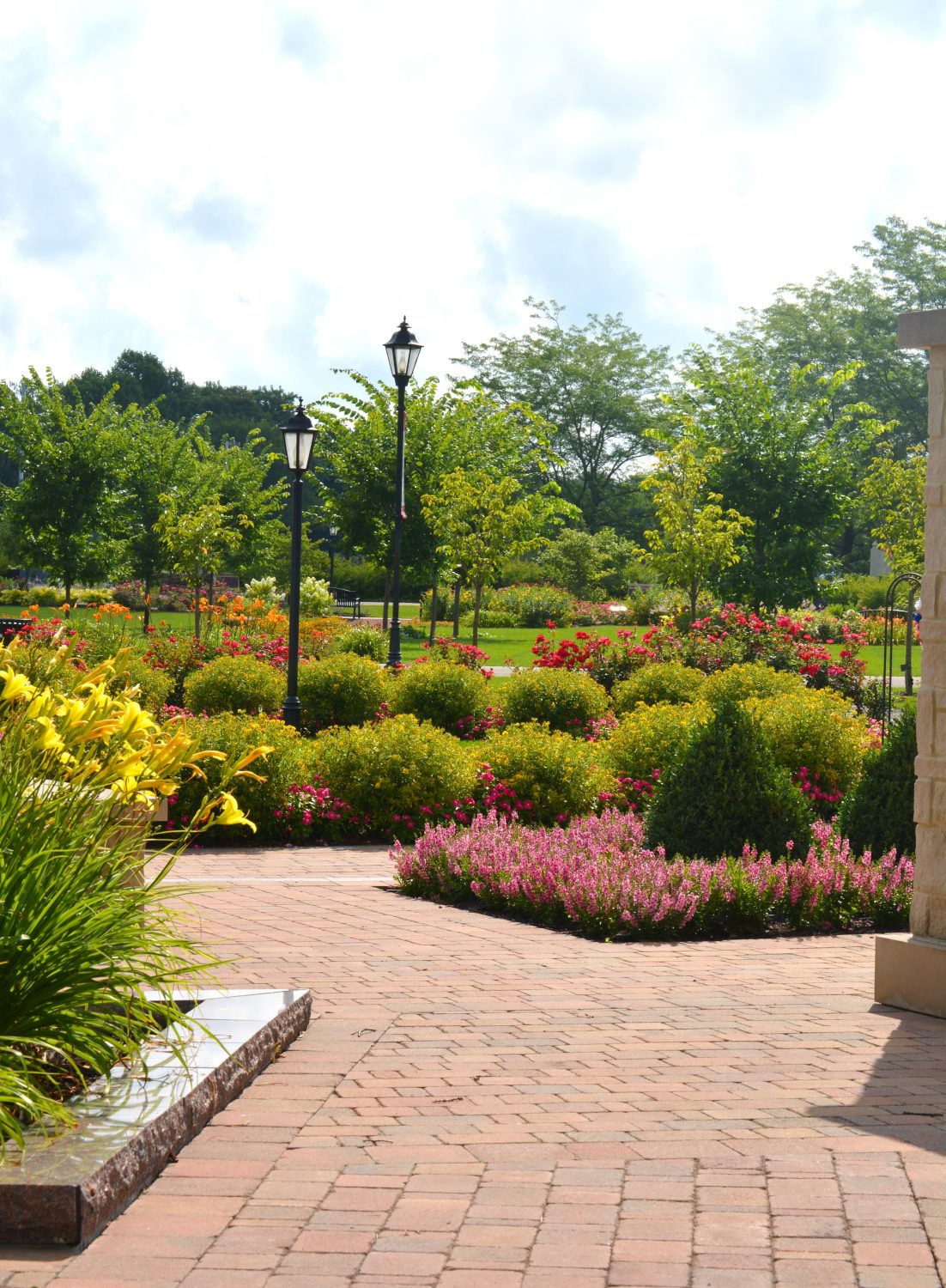
The Perennial-Driven Garden: Year After Year of Different Color
The perennial garden is the one that rewards patience. Year one looks thin because most perennials spend their first season setting roots and not putting energy into the visible plant. Year two looks better. Year three is when the garden becomes the garden the design drew.
Designing a perennial garden well means understanding the seasonal arc. We pick plants that bloom in succession across the season rather than all at once. Early spring is allium, bleeding heart, columbine, and bulbs. Late spring carries through with peonies, irises, and salvia. Summer brings the workhorses: coneflower, black-eyed Susan, daylily, garden phlox, Russian sage. Fall closes with sedum, asters, ornamental grasses, and the seed heads of summer perennials left standing.
The palette has to be honest about East Central Indiana conditions. The garden has to handle clay-heavy soil in most subdivisions, USDA Zone 5b through 6a winters, summer humidity, and the occasional weeks where the property goes dry. We do not specify plants that are marginal in Indiana even when the homeowner has seen them in another region, because a garden that loses a third of its plants in the first winter is a garden that never gets to year three.
The garden also has to be honest about light. Most properties have at least two distinct light conditions across the garden area, and a perennial palette has to be planned for each. The dry-shade corner under the oak does not get the same plants as the full-sun strip along the south fence.
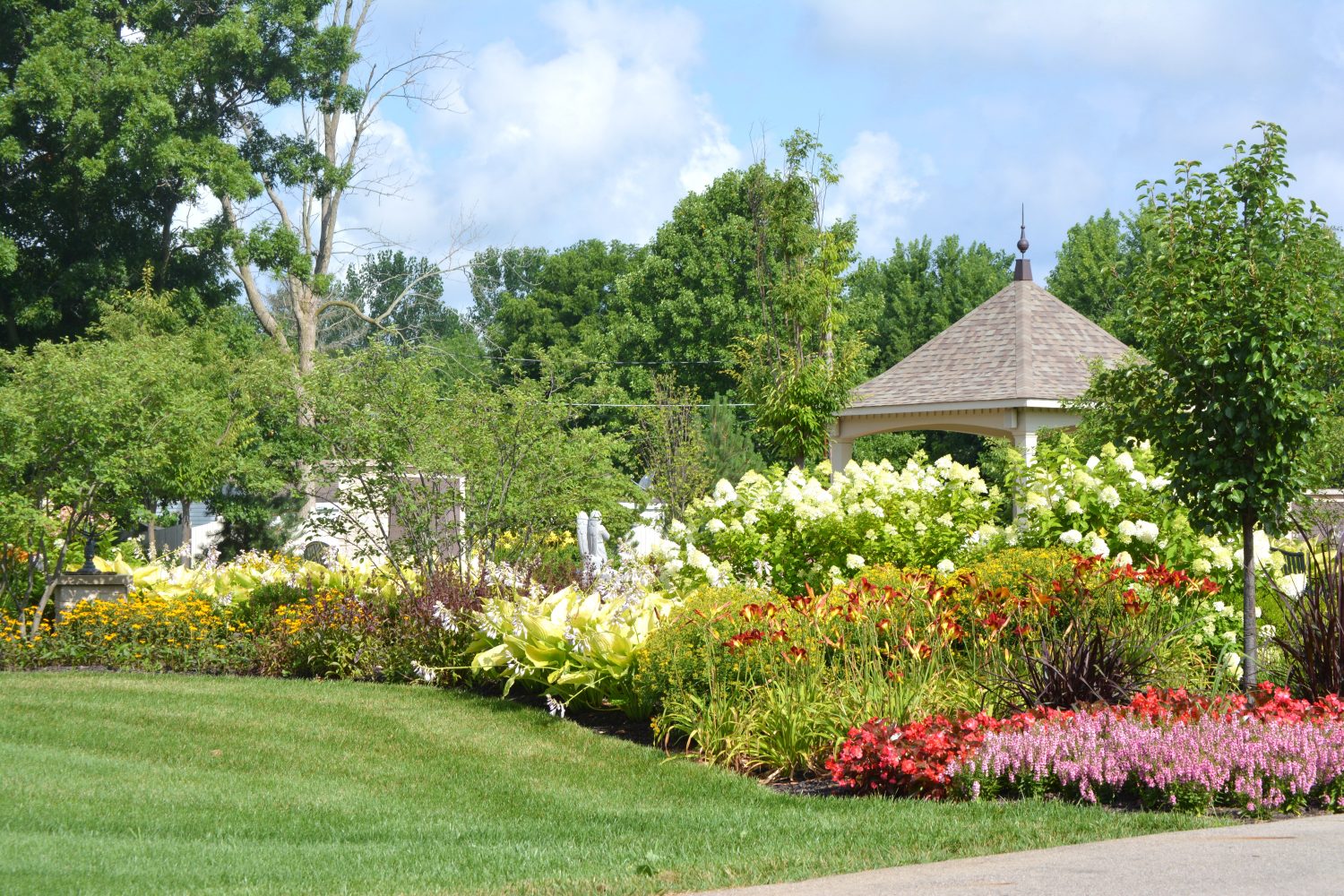
The Cottage Mix: Higher Density, Naturalistic, More Lived-In
The cottage mix is the type homeowners most often describe and least often get right when they try to install one themselves. The naturalistic look reads as casual, but it depends on careful design discipline.
Density is the first decision. A real cottage garden plants at roughly twice the density of a standard perennial bed. The plants grow together, lean on each other, and fill the bed corner to corner. Bare soil does not show. The result reads as abundant rather than spotted-out. Under-planting a cottage garden is what makes it look thin in year one and never quite recover.
The plant mix is the second decision. Cottage mixes include perennials, but they also pull in herbs such as lavender, sage, oregano, and thyme; self-seeding annuals such as love-in-a-mist, larkspur, cosmos, and calendula; and texture plants that the more formal perennial garden does not lean on, like alliums for height and fennel for fronds and opium poppies for sculpture. The texture variety is what makes the cottage mix look like a garden that has chosen its own composition.
The third decision is structural anchors. Even the loosest cottage garden needs a few woody anchors that read in winter when the herbaceous layer has gone dormant. Boxwood, dwarf hydrangea, a single ornamental tree, an arbor with a clematis. The structural anchors hold the bed visually in February when nothing else is doing the work.
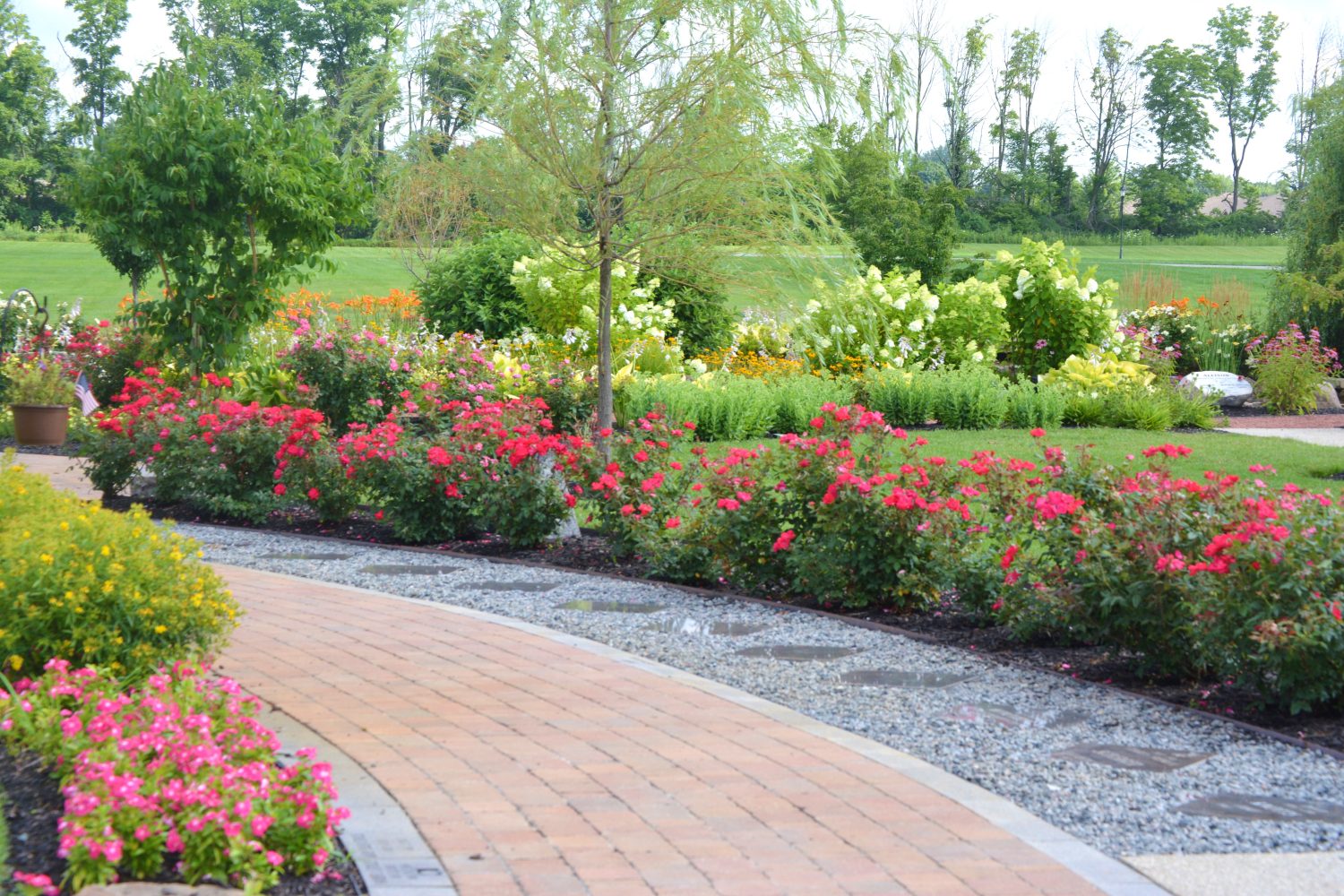
The Working Garden, and What Every Garden Design Has in Common
The working garden is the one most homeowners do not know they want until we walk the property with them. They came to us thinking ornamental. By the second conversation they realize what they actually want is a small bed near the kitchen door where they can clip basil in July, cut zinnias for the table in August, and pull a tomato off the vine in September.
A working garden design solves three problems that an ornamental garden does not. Access (reach every plant without trampling). Rotation (the productive plants need to move each year so the soil does not get worn out). And visual integration (the working garden has to read as part of the property, not as a utility plot the homeowner did not have time to hide).
Regardless of which type the design lands on, every garden we design has the same four pieces in common.
First, the design accounts for what the property is doing already. The garden does not get drawn over a soil problem or a drainage problem; the upstream work happens first, then the garden lands on top of a property that can hold it.
Second, the planting plan names specific plants with botanical names, quantities, and planting sizes. Not “a few perennials in the back” but “12 Echinacea purpurea Magnus in 1-gallon containers.” The plant list is the document the install crew works from. It is also what the homeowner will be able to look at five years later and know what was supposed to be where.
Third, the design includes a maintenance plan, calibrated to what the homeowner has actually told us they can give the garden. A high-maintenance perennial garden is the right design for a homeowner who finds the maintenance enjoyable. The same design is a failure for a homeowner who has no time. The right match is what makes the garden survive.
Fourth, the design hands off cleanly to the broader property. A garden in isolation feels like an island. A garden designed with the surrounding planting, hardscape, and grade in conversation reads as part of the property. The same design discipline that lands at the property scale at landscape design services scales down to the garden, just with a different focal length.
Frequently Asked Questions
What is included in a garden design?
A garden design is a planting plan: the layout, species selection, spacing, and seasonal sequencing of beds, borders, and foundation plantings. At Plant Studio Landscape it is drawn to fit the conditions of your specific Muncie property, the sun exposure, the soil, and the drainage, so the plants are chosen to thrive where they are placed rather than fight the site. A good garden design also plans for how the beds look across the full Indiana season, from spring bulbs through fall color, so there is always something doing the work.
What plants grow best in the East Central Indiana climate?
East Central Indiana sits in USDA hardiness zone 6a, with cold winters, hot humid summers, and heavy clay soil. Native and proven plants handle this best: perennials such as coneflower, black-eyed Susan, little bluestem, and switchgrass, shrubs such as viburnum, ninebark, and panicle hydrangea, and trees suited to the local zone. Natives are chosen not only because they survive the freeze and thaw but because they support pollinators and need less water and intervention once established. Plant selections outside the local hardiness range are the ones that fail in the first hard winter.
When is the best time to plant a garden in Indiana?
Spring and fall are the two strong planting windows in East Central Indiana. Spring planting, once the ground has thawed and warmed, gives perennials and shrubs a full season to root before winter. Fall planting, in September and October, lets roots establish in still-warm soil while top growth slows, often with less watering required. Summer planting is possible but needs more careful watering through the heat. The window matters most for a major investment in plant material, which is why timing is part of the design conversation.
How do I keep a garden looking good without constant work?
The work comes down to the design. A garden planned around the right plants for the site, properly spaced, and mulched to hold moisture and suppress weeds, needs far less intervention than one fighting its conditions. Choosing natives and proven perennials suited to the local zone reduces watering and replacement. Many Muncie-area homeowners pair a garden design with a recurring maintenance plan so bed care, mulch refresh, and seasonal cleanups keep the planting looking right at year five, not just at installation. A low-maintenance garden is designed that way from the start.
Can you redesign an existing garden that has gotten overgrown?
Yes. Many projects are renovations rather than blank slates. Overgrown beds usually have good bones, the framework is sound but the plant material has outgrown its space, self-seeded, or declined. A redesign edits what is there, removes what is failing or crowding, divides what is healthy, and reworks the layout and soil so the bed has a coherent plan again. For an established Muncie property this is often a better value than starting over, because mature plants worth keeping stay in place.
Schedule a Garden Design Walk
We picture a world where every garden on a property reads as one designed piece of the whole. A first walk does not cost anything. We walk the property, talk through what kind of garden the homeowner has in mind, look at the light and the soil and the drainage and the maintenance window, and tell you which of the three types fits and what the year would look like through it. Call (765) 717-3917 or request a quote.