
Sod Installation for Muncie and East Central Indiana Properties
Sod looks finished the day it lands. The actual installation is not the day the rolls hit the ground. It is the establishment window that wraps around it: the prep week before the truck arrives, the install day itself, the first week when the roots are deciding whether to anchor or curl up, the first month when the lawn either thickens or thins, and the first season when the new lawn either becomes a Muncie lawn or becomes the next replacement project. We run sod installation across that whole window, not just the install day. The work we do for homeowners around Muncie, Westside Park, and Yorktown Memorial Park is sequenced to that establishment cadence start to finish.
The Establishment Window Is What You Are Actually Paying For
At our Muncie design studio, sod is treated as a forty-five-day project with one visible install day in the middle of it. Josh Perkins, Landscape Architect, sets the schedule against the establishment cadence rather than against the install date. The cadence has five named windows: prep week, install day, first week, first month, and first season. Each window has its own success criteria. A sod project that hits week one and fails week three was never going to work, and the reason is almost always traceable back to prep week.
Most sod problems we get called to look at on existing installs were lost in prep week. The grade was not corrected. The soil was not amended. The irrigation was not on a timer the homeowner could trust. The roll-up that shows up in mid-July as a yellowed patch was set in motion in late April when the prep was rushed to fit a job finish schedule. The cadence-led approach is what keeps that loss from happening on our installs.
Prep Week: The Five to Seven Days That Decide Everything
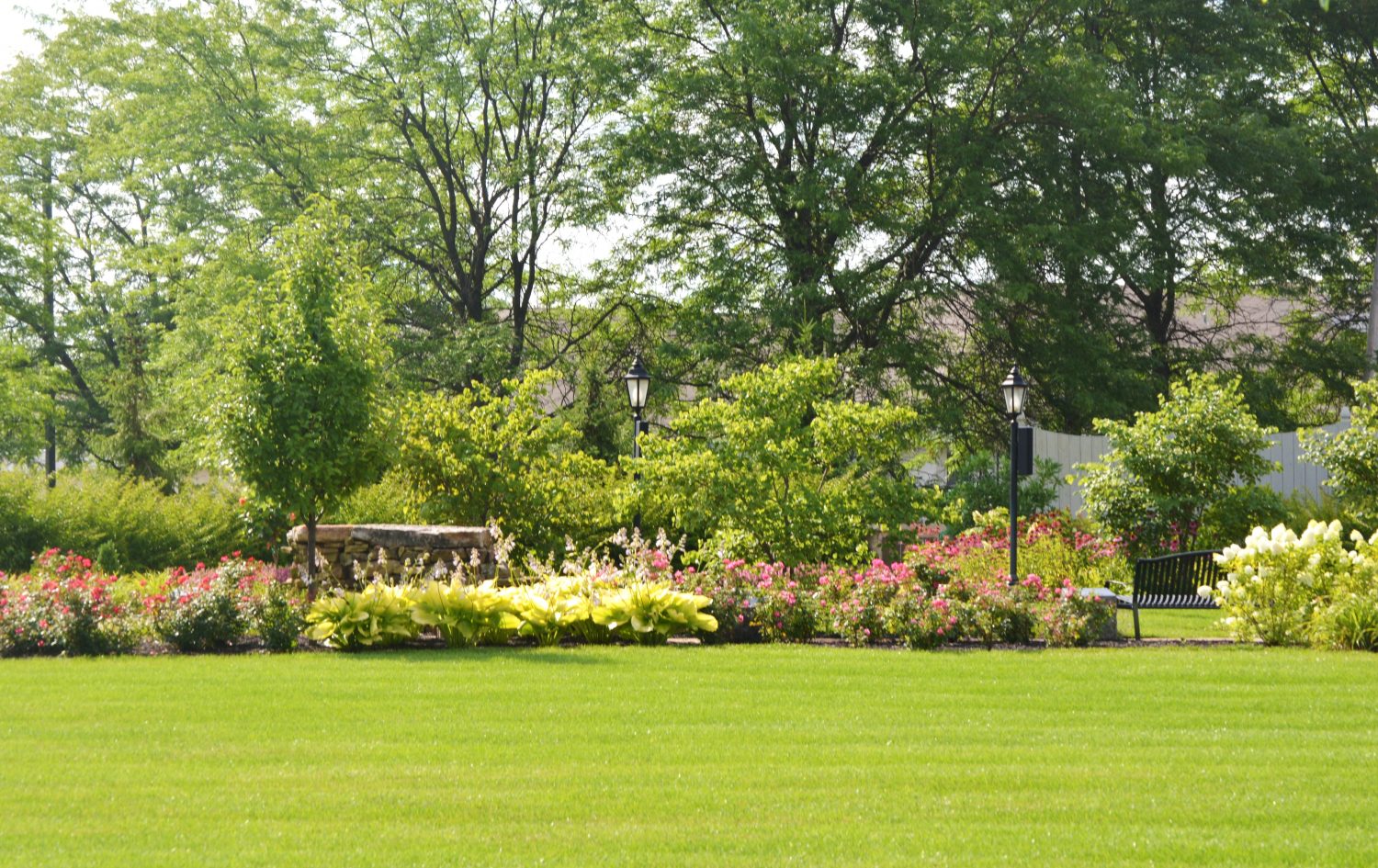
Prep week starts five to seven days before the sod arrives. Existing grass and weeds are stripped or treated depending on the situation. Subgrade is shaped to flow water away from the structure and toward the property’s drainage plan. Where the lot has a known drainage problem, prep week is when it gets fixed; see drainage and grading for the underlying water work that pairs with sod installs where the grade has to move first. Soil amendment, usually compost and starter fertilizer, gets tilled into the top three to four inches.
Irrigation is staged in prep week, not on install day. New irrigation runs go in before the sod lands, or the tie-in to an existing system gets tested and adjusted to deliver the establishment regime the lawn needs. When the property needs a planting install at the same time, see installation for the planting establishment work; the planting establishment window and the sod establishment window overlap, and the irrigation plan has to account for both. Final grade gets smoothed, rolled, and checked the day before the pallets arrive.

Install Day Through the First Week: Anchor or Roll-Up
Install day starts with pallets arriving same-day from a regional grower so the rolls are not sitting on a truck losing root vitality. Seams stagger like brick courses. Edges get cut flush against hardscape and beds. The whole lawn gets a finish roll after install to seat the cut roots into the prepared soil. Watering starts inside the first hour. Sod installed in the morning gets its first deep soak before the crew leaves at noon.
The first week is when the lawn either anchors or rolls up, and watering is the variable that decides which one happens. The schedule is twenty to thirty minutes per zone, two to three times a day for the first seven days. We hand off a written schedule per zone and verify the controller programming before the crew leaves. A homeowner who runs the new sod on the old turf schedule overwaters or underwaters depending on which way the existing schedule errs; the establishment schedule has to be its own program for the first month.
We come back at the seven-day mark on every install. We tug a corner of a roll in three places. If the corner lifts cleanly, the roots have not anchored yet and watering continues unchanged for another week. If the corner tears, the roots have anchored and watering can step down to the first-month regime.

The First Month and the First Season: Survival to Self-Sustaining Lawn
The first month is when watering steps back and mowing begins. Frequency drops from two or three times a day to once a day, then to every other day by week four. Depth increases. The lawn is being trained to push roots down toward deeper water rather than staying near the surface. First mow happens when the blade height hits three and a half to four inches. The mower deck stays at three inches, and only one-third of the blade height comes off in a single mow. Bagging is on for the first two mows; clippings get returned after that.
The first season is when the lawn finishes establishing or finishes failing. By Labor Day on a spring install, the lawn should be self-sustaining on a once-or-twice-weekly deep watering and a normal mow rhythm. By the second growing season, the lawn should be holding its own through a Muncie July without daily watering. The Plant Studio install is built to land at that point. If a homeowner is still hand-watering daily in year two, the prep week or the first-week schedule did not go right and the install conversation should have been different.
Frequently Asked Questions
Is sod better than seed for a new lawn?
Both work, with different trade-offs. Sod gives an instant, established lawn, controls erosion immediately, can be installed across most of the growing season, and has a higher up-front cost. Seed costs less but takes weeks to germinate and months to fill in, needs careful watering, and is vulnerable to washout and weeds while it establishes. For East Central Indiana homeowners who want a finished lawn quickly, on a slope, or around a new build, sod is usually the better value despite the higher initial cost.
How is sod installed properly?
Proper sod installation starts below the grass. The soil is graded and prepared, debris and old turf removed, the surface leveled for drainage, and amended where needed. Fresh sod is then laid tight with staggered seams and good soil contact, rolled, and watered immediately and consistently through establishment. Skipping the soil preparation is the most common mistake; sod laid on unprepared or compacted ground will not root well and will struggle no matter how good the turf was when it arrived.
When can sod be installed in Indiana?
Sod can be installed across most of the East Central Indiana growing season, from spring through fall, as long as the ground is not frozen and it can be watered. Spring and early fall are ideal because moderate temperatures and natural moisture ease establishment. Summer installation is possible but demands diligent watering through the heat. The main constraint is consistent water during the first few weeks, which is when the roots knit into the prepared soil.
How long does new sod take to root?
New sod typically begins rooting within two to three weeks and is well established in about a month, given consistent watering and the right conditions. During that window it needs frequent water to keep the soil moist and should not be heavily walked on or mowed too early. After establishment, watering tapers to a normal schedule. Many homeowners pair a new sod lawn with irrigation so the establishment watering is reliable rather than dependent on remembering to move a hose.
How much does sod installation cost?
Cost depends on the square footage, the soil preparation and grading required, the type of turf, and site access. The price per square foot is higher than seed, but it includes the labor of preparing the ground and laying an instant lawn. For an honest number on an East Central Indiana property, the area and the condition of the existing ground need to be seen, which is part of the site walk. You receive a written proposal with the scope and price before any work begins.
Schedule a Sod Walk
A first conversation does not cost anything. We walk the property, look at the existing grade and soil, talk through what install window the project fits, and tell you what we would do and what we would not do. We picture a world where the grass is the part of the project that just works, not the part you babysit through two summers. Call (765) 717-3917 or request a quote and we will get a site walk on the calendar.