
Fire Feature Design and Construction in Muncie, Indiana
You deserve a fire feature that gets used across three of the four seasons, not just on the occasional warm summer night. Most outdoor fire installations on Indiana properties get used hard for a year or two after they go in and then settle into a pattern of two or three lit fires a summer. The problem is rarely the fire feature itself. The problem is that the fire was installed without the conversations that would have made it useful through April, October, and most of the shoulder weather between.
A fire feature designed right gets the homeowner outside in late March on the first warm evening, in October as the leaves come down, and on any Saturday in November that hits 55 degrees. The page below walks the three comparison axes that decide what the right fire feature for a property is: wood-burning versus gas, fire pit versus fireplace versus fire table, and built-in versus movable.
Josh Perkins, Landscape Architect, leads the design decisions at Plant Studio Landscape’s Muncie fire feature crew. The crew runs the same property year over year and reads how the fire actually got used in season one into the recommendations for any season-two modifications.
Wood-Burning Versus Gas: What Each One Does and Does Not Do
The first comparison decides almost everything else.
Wood-burning fire features cost less to install and deliver the experience most homeowners say they want when they describe a fire pit: the crackling, the smell, the lighting it themselves, the marshmallows. The trade-off is real and shows up in maintenance. The pit has to be cleaned out regularly. Wood has to be stored, dried, and rotated. Building a fire takes 20 minutes from cold start to comfortable warmth. Smoke shifts with the wind and is not always welcome on the neighbor’s patio. Burn bans in dry months are real and limit when the feature is usable.
Gas fire features (natural gas or propane) cost more to install because of the gas line and the burner assembly, but deliver instant fire with no smoke and no cleanup. The homeowner sits down with a glass of wine, turns the key, and there is fire. Maintenance is minimal: occasional cleaning of the burner, inspection of the gas line. The trade-off is that gas fire is honest about what it is. Some homeowners feel it does not deliver the “real fire” experience they were after, and within a year they stop using the feature because it has the wrong character for them.
We recommend wood-burning to homeowners who treat the fire as the destination of the evening, the activity around which everything else organizes. We recommend gas to homeowners who treat the fire as an ambient element while the actual activity is conversation or dinner or kids playing in the yard. Both are right answers. They are right for different homeowners.
Fire Pit Versus Fireplace Versus Fire Table
The second comparison decides what the fire feature is structurally.
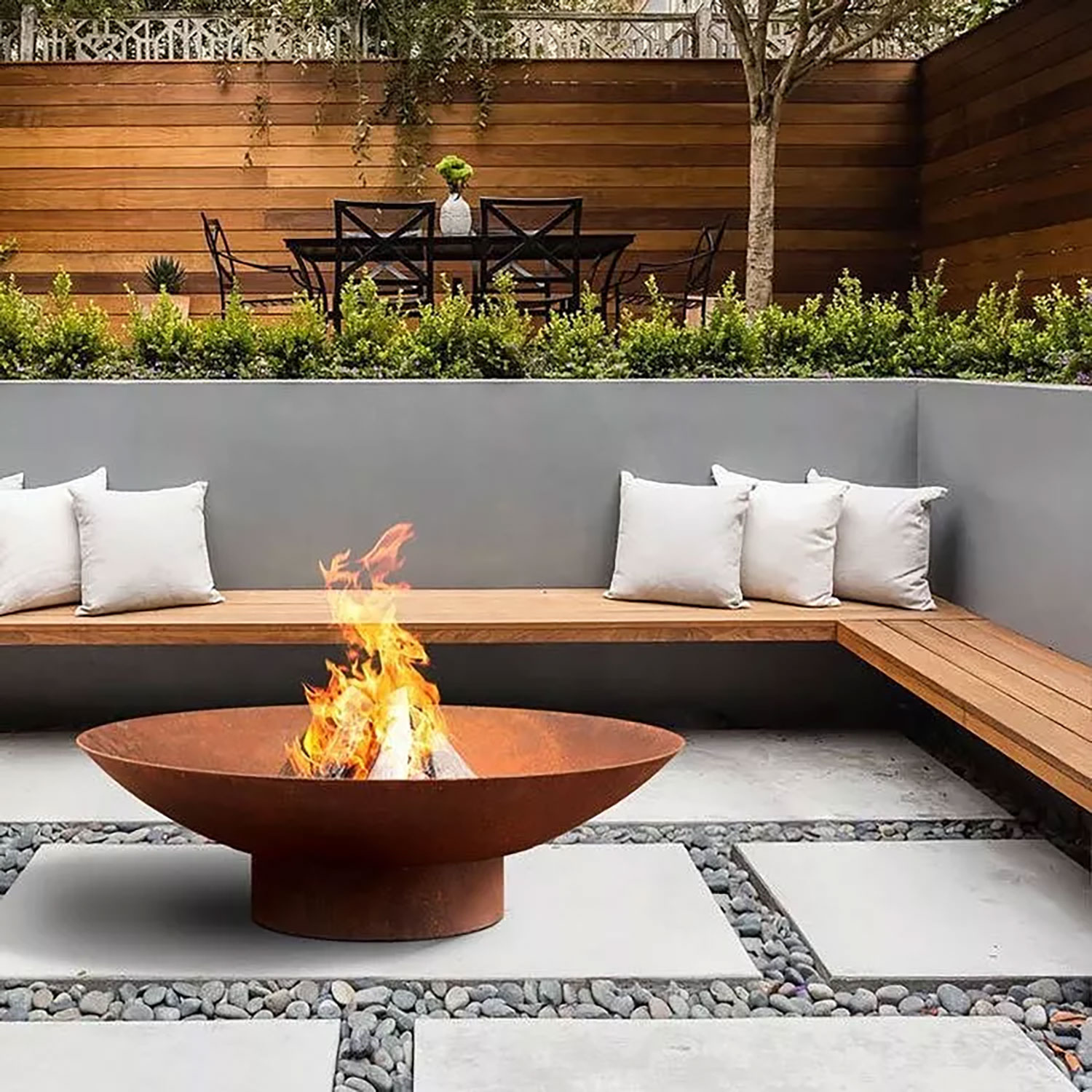
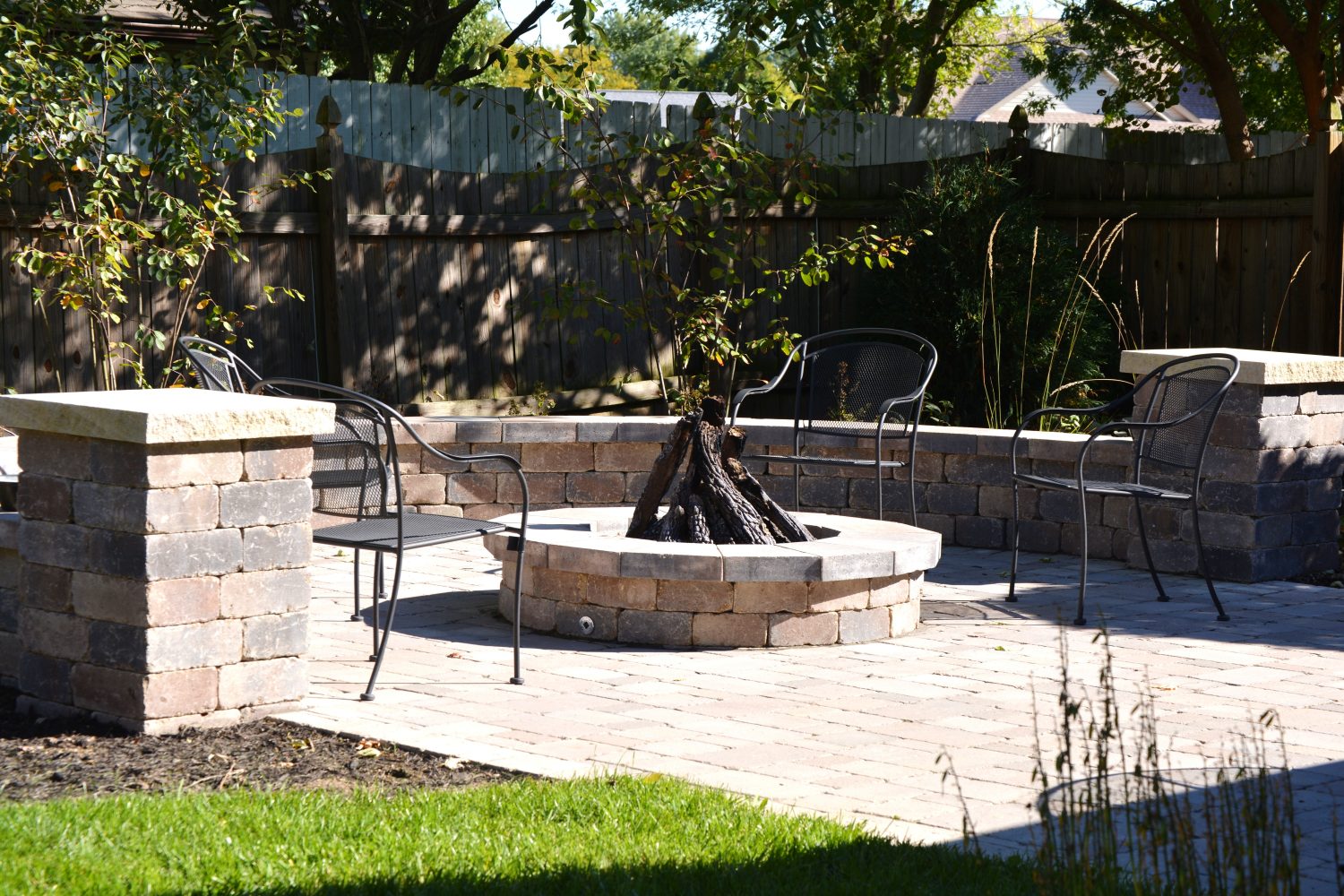
A fire pit is the open-bowl format. Bench-height seating around it, the fire in the middle, everyone facing inward. Best for groups of four to eight where the social mode is everyone-engaged. Indiana properties handle fire pits well because there is usually a way to orient one so the prevailing wind sends smoke away from the house and the deck. Build cost is lowest of the three.
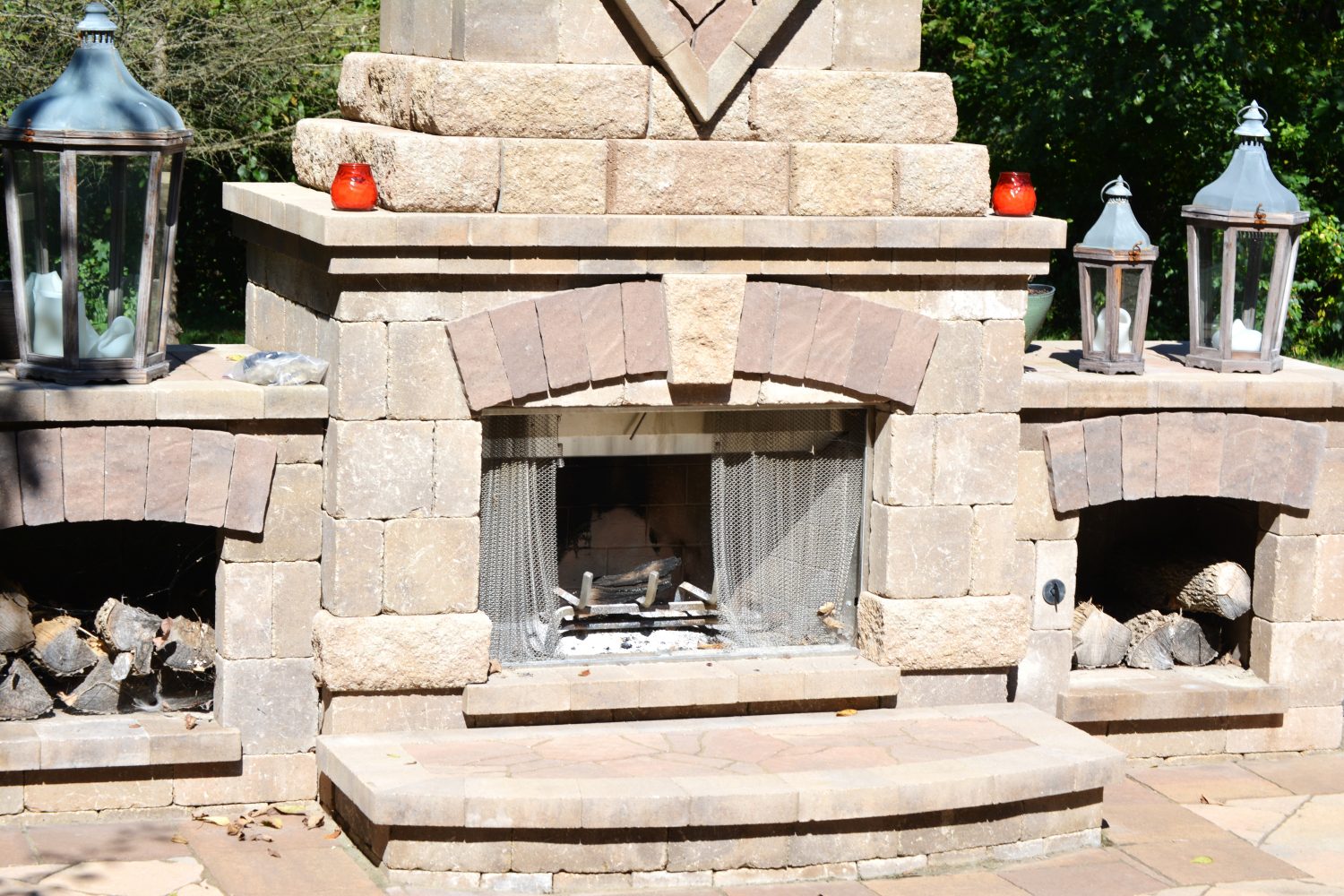
A fireplace is the vertical-stack format. A back wall, a chimney, the fire facing one direction. Best for properties where the fire is positioned against the back of the yard with seating facing into the property. The fireplace creates a focal point in the outdoor room the way an indoor fireplace anchors a living room. Build cost is highest of the three because of the chimney structure and the masonry work, but the fireplace also serves as a sight line anchor when not lit.
A fire table is the contemporary low-profile format. A flat surface with a fire trough in the middle, seating around it at conversation height. The fire is more visual than thermal. Often gas-only because the table format does not handle wood debris well. Best for properties where the outdoor program is dining-and-drinks-focused rather than gathered-around-the-flame. Build cost is between fire pit and fireplace.
Most homeowners come in wanting a fire pit. Some realize after the walk that a fireplace fits the property better. A few end up choosing a fire table for the entertaining-friendly profile.
Built-In Versus Movable: The Decision Most Homeowners Skip
The third comparison is the one most homeowners do not realize they are making.
Built-in fire features become part of the property permanently. They get a foundation, get connected to gas if applicable, get surrounded by designed hardscape, and stay where they go in. Movable fire features can be relocated, replaced, or removed without rebuilding any hardscape.
The built-in version is the right call when the homeowner is sure where the fire belongs and is committed to the layout for the long term. The structure can be designed to integrate with the patio, the seating, and any nearby hardscape. The aesthetic is fully resolved.
The movable version is the right call when the homeowner is unsure about placement, when the property is likely to evolve over the next few years, or when the homeowner wants to take the feature with them to a future home. The trade-off is aesthetic. A movable fire feature reads as furniture sitting on the patio rather than as part of the design.
We design built-in fire features more often than movable ones because most of our clients are designing the outdoor program as a long-term feature of the property. We recommend movable when the homeowner has not yet decided on the broader outdoor program, when a built-in would commit the property to a layout the homeowner is not ready for.
Sizing and placement decisions matter as much as the three comparisons above. Size the feature to the seating it actually serves (a 48-inch fire pit fits six chairs comfortably; a 36-inch fits four). Place close enough to walk to in slippers, far enough that smoke does not drift back through open windows (25 to 40 feet is the sweet spot on most Indiana properties). Consider neighbors: a fire feature 10 feet from a neighbor’s deck is going to lead to a hard conversation by year two. The fire feature is rarely the most expensive piece of an outdoor program; it is often the piece that decides whether the rest of the program gets used.
Frequently Asked Questions
What is the difference between a fire pit and an outdoor fireplace?
A fire pit is an open, lower-profile feature, usually round or square, that people gather around from all sides; it is more casual and generally lower cost. An outdoor fireplace is a vertical structure with a chimney that anchors a space, directs heat and smoke in one direction, and creates a focal point and a sense of an outdoor room. The right choice depends on the space, the budget, and how you want to use it. Both are designed and built to suit the patio and outdoor living area around them.
Should I choose a wood-burning or gas fire feature?
Wood-burning features give the classic crackle, aroma, and higher heat, with the trade-off of tending the fire, sourcing wood, and cleaning ash. Gas features light instantly, offer controllable flame and easy shut-off, and burn clean, with the trade-off of running a gas line and somewhat less heat and ambiance. Many East Central Indiana homeowners choose gas for convenience or wood for the experience; some build both. The decision shapes the design, since a gas feature needs a line run during the build.
How does a fire feature extend the outdoor season in Indiana?
This is exactly why fire features are so popular here. East Central Indiana has cool spring and fall evenings and a real winter, and a fire feature makes a patio usable when it would otherwise sit empty. It draws people outside in March and keeps them out into November, turning a summer-only space into a three-season one. Paired with lighting and a covered or sheltered seating area, a fire feature is one of the highest-value additions for getting more months of use out of a yard.
Is a fire feature safe near a patio and house?
Yes, when it is properly designed and placed. Clearances from the house, overhangs, and combustible materials, the right non-combustible materials and base, proper venting on a fireplace, and a safe surround all matter, as do any local code requirements in Muncie and Delaware County. A gas feature adds the safety of a controlled shut-off. Designing the fire feature as part of the hardscape, by a team that knows the clearances and code, is what keeps it both beautiful and safe.
How much does a fire feature cost?
A simple built-in fire pit is a modest investment, while a full masonry outdoor fireplace with a chimney and stone facing is significantly more, and a gas feature adds the cost of running a line. Material, size, and detail drive the range. Because a fire feature is usually built into a larger patio or outdoor living project, it is scoped together with the surrounding hardscape during the site walk, and you get a written proposal with the full number before work begins.
Schedule a Fire Feature Walk
We picture a world where the fire is going by 6 in October, the lights are on, and the family is outside because the back yard pulls them outside, not because the homeowner is trying to justify the build cost. A first walk does not cost anything. We walk the property, talk through how the fire would actually get used and which of the three comparison axes the homeowner is on, and tell you what would fit. Call (765) 717-3917 or request a quote.