
Lawn Fertilization Programs for Muncie and East Central Indiana
We picture a world where the lawn does the heavy lifting on its own most of the season. Green and dense through the heat. Weed pressure low without a wave of treatments. Pest damage caught before it turns into a bare spot that takes three years to fix. A lawn that holds its color from May through October is a lawn that was treated on the right schedule, with the right products, by people who read the lawn as one organism instead of as a route stop.
Most homeowners we meet are paying for lawn treatments already. The problem is rarely that the homeowner is doing nothing. The problem is that the treatments are not connected to each other, to the lawn’s actual condition, or to the Indiana growing season. The page below names the three programs we run, the products we choose between, what an Indiana treatment year actually looks like when each application is timed right, and the three places DIY treatment programs reliably break down.
Josh Perkins, Landscape Architect, oversees the program decisions for Plant Studio Landscape’s Muncie lawn treatment crew. The same crew runs the same properties year over year and reads what the lawn did the previous season into the choices we make for the next one.
Three Lawn Treatment Programs and Where Each One Fits
The first comparison a homeowner is making, whether they realize it or not, is between three program shapes. Each fits a different property and a different starting point.
The first is the full annual program. Five to six applications across the season, sequenced for what the lawn needs at each stage: early-spring pre-emergent, late-spring fertilization with broadleaf weed control, summer-tolerance feeding with a grub-watch line item, late-summer correction for whatever the heat surfaced, fall fertilization for root recovery, and a late-fall application that sets up next spring. This is the program for a homeowner who wants the lawn handled and wants one crew accountable for the result.
The second is the targeted bolt-on. A homeowner is doing most of the lawn care themselves and wants a crew that comes out two or three times a season for the applications most homeowners miss: the early-spring pre-emergent at the correct timing window, the late-summer grub treatment if the lawn shows the right symptoms, and the late-fall application that does more for next year’s lawn than any spring application will. The bolt-on fits a property where the homeowner is hands-on and wants professional help only where DIY breaks down hardest.
The third is the restoration program. The lawn is not where it needs to be yet, and a maintenance-shaped treatment plan would be putting fertilizer on a lawn that has not been reset. Restoration is a one-season investment: aeration, overseed, soil amendment based on a real test, and a treatment schedule built to support the new grass coming in rather than to push tired grass through one more summer. After the restoration year, the property moves into the full annual program or the targeted bolt-on depending on what fits.
The wrong program for a property is the program the previous service was running because the previous service ran one program for every property. The right program is the one that matches what the lawn is and what the homeowner wants to do.
Synthetic, Organic, and Blended Programs on Indiana Soil
The second comparison a homeowner ends up making is between product chemistries. Each one does something the others do not, and each one falls down somewhere the others do not.
Synthetic-only programs hit fast. The nitrogen in a granular synthetic application is plant-available within a week, the response shows up at the curb inside the same month, and the cost per application is the lowest of the three. The trade-off is that synthetic-only programs do almost nothing for the soil underneath the lawn. East Central Indiana soil is clay-heavy in most of the residential subdivisions we work, and clay soil that never gets a soil-microbiology assist eventually stops doing the work it needs to do. A property that has been on synthetic-only for ten years will respond well to one application and weakly to the next, and the homeowner ends up paying for more applications to chase the same green.
Organic-only programs do the opposite. The response window is slower, the cost per application is higher, and the curb signal in the first season is weaker. What organic programs do well is rebuild soil biology over time, which is the part of the lawn most homeowners never see and the part that decides whether the lawn is still good at year ten. Organic-only is the right call for properties where the homeowner is patient, the lawn is already in decent shape, and the priority is long-horizon health more than this-July color.
Blended programs are where most Indiana properties end up. A synthetic backbone gives the lawn the response window homeowners are paying for, an organic component layered into the annual schedule does the soil work the synthetic cannot, and the cost lands between the two. Blended programs are also easier to adjust mid-season when the weather forces a different decision than the calendar planned for.
The choice between the three is rarely permanent. We have moved properties from synthetic-only to blended after a soil test surfaced the underlying issue, and we have moved properties from organic-only to blended when the homeowner decided the slow response window was costing them at the curb. The conversation we want to have is which one fits this property this year, not which one is right in the abstract.
What an Indiana Treatment Year Looks Like When Each Application Is Timed Right
The third comparison is between a treatment year that was timed correctly and one that was not. The applications can look identical on a service invoice and produce wildly different lawns by August, because the lawn is not responding to what was put down. It is responding to when it was put down.
The early-spring application has the narrowest timing window of the year. Pre-emergent has to go down before soil temperatures stay above fifty-five degrees overnight for several consecutive days, which is the threshold crabgrass uses to start germinating. In East Central Indiana that window opens between mid-March and mid-April depending on the season. A pre-emergent applied two weeks late has already lost most of its season.
The late-spring application carries the first round of broadleaf weed control along with the season’s first real fertilization. The lawn is growing fast at this point and is most responsive to a feeding. The weeds in the lawn are also most exposed and most vulnerable to treatment because they have leafed out fully and are pulling product into the root system.
The summer application looks like the easiest to skip and is the one that decides what August looks like. The job here is light fertilization plus a grub-watch read on the lawn. Grub damage usually shows in mid-to-late July, but the treatment window for grubs is several weeks earlier than that. A summer application that is just fertilizer and not a real lawn read is an application that left damage on the table.
The fall application is the most important application of the year and the one DIY homeowners skip most often because the lawn no longer needs mowing every week and the urgency has gone out of the property. Fall fertilization rebuilds the root system that next year’s lawn will draw from. A property that gets a real fall feeding shows up to the next May ahead of the property that did not, and the gap compounds every year the fall application gets skipped.
The late-fall application is the one most professional programs include and most homeowners do not realize is happening. It goes down after the lawn has stopped top-growing for the year but while the roots are still active. The application overwinters in the root zone and is available to the lawn the moment the soil warms in spring. The lawn that comes out of dormancy green a week before its neighbors is almost always the lawn that had a late-fall feeding the previous November.
Why DIY Lawn Treatments Fail on the Same Three Things Every Year
The fourth comparison, the one most homeowners do not run until after the fact, is between a DIY treatment year and a professionally-run one. The DIY year fails on three predictable things, every season.
The first is timing. The bag in the garage is correct for the early-spring application. The bag goes down two weeks after the optimal window because the homeowner waited for a Saturday with good weather. The pre-emergent now lays down on top of crabgrass that has already germinated. The whole season’s weed-control story is set before May. The same pattern repeats with the fall feeding, which slides because the leaves came down and the lawn stopped looking like a project. By the time the homeowner gets around to it, the soil is too cold for the root system to use what was put down.
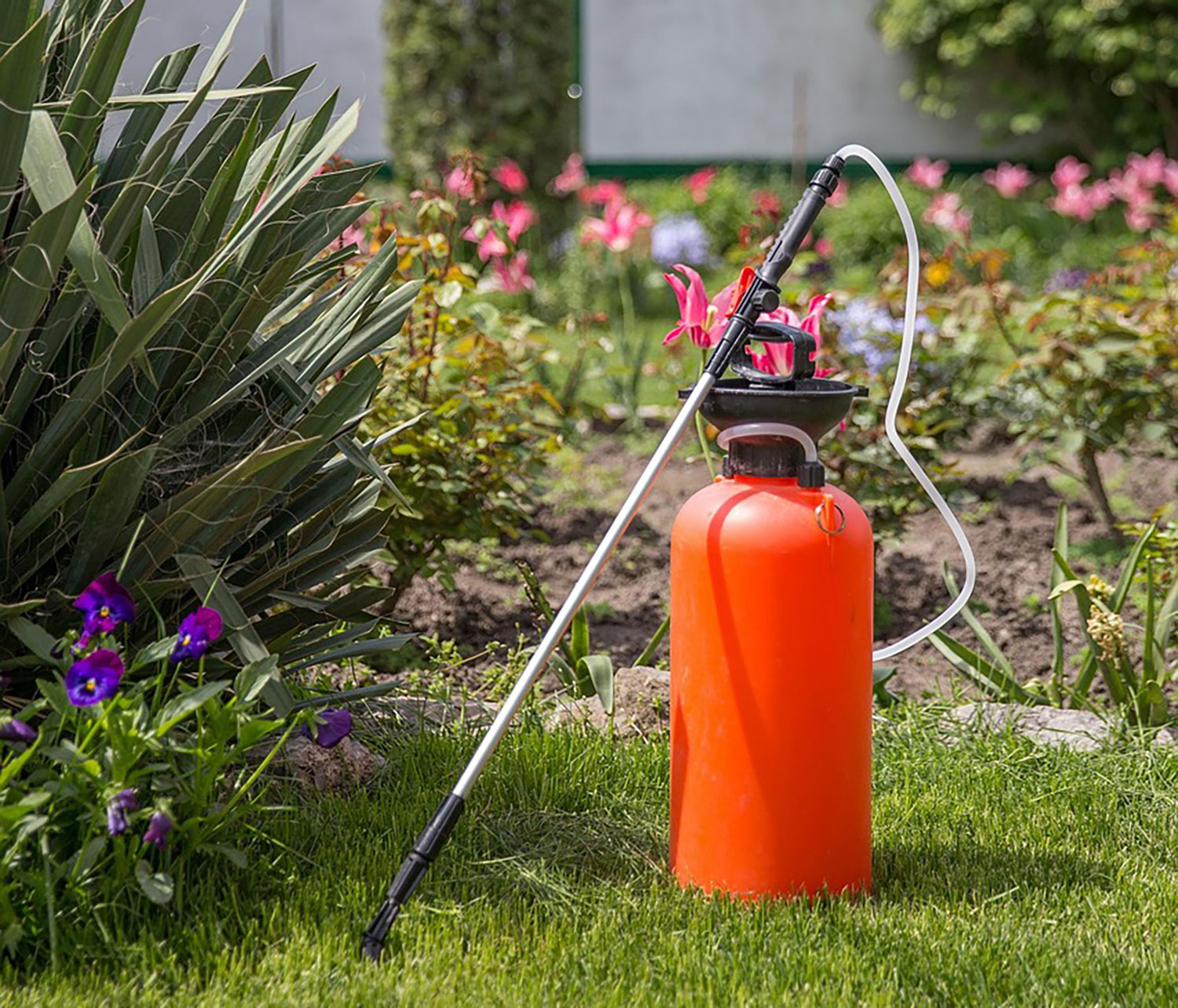
The second is coverage. A push spreader on a half-acre lawn applied by a homeowner who has not calibrated it once produces a coverage pattern that shows up in July as a stripe map: dark green where the spreader overlapped, lighter where it skipped. The lawn looks treated and looks bad at the same time. A walk-behind broadcast spreader corrected for the operator’s pace and the granule size of the product is doing work the homeowner has not yet bought.
The third is diagnosis. The lawn has bare spots in July. The homeowner buys a bag of broadleaf weed killer because that is what was on the end-cap at the store. The bare spots are grub damage, not weed damage, and the broadleaf product does nothing for the actual problem. By the time the lawn gets diagnosed correctly, the grub-treatment window has closed and the damage is locked in for the year. A professional walk on the property in mid-July reads the symptoms differently and applies the right product at the right time, which is the part of the work the DIY year does not include even when it includes everything else.
The argument for a professional program is not that the products are different. Most of the products are not. The argument is that the timing window, the coverage discipline, and the diagnosis read are not things a homeowner can outsource to a bag on a shelf. They are services. A homeowner who values the lawn at the curb is buying those three services, more than buying the granules.
Frequently Asked Questions
How many times a year should a lawn be fertilized in Indiana?
Most East Central Indiana cool-season lawns do best on a multi-application program across the growing season, commonly four to six rounds from spring through late fall, each timed to what the grass needs at that point: early-season feeding and pre-emergent, late-spring and summer support, and crucial fall applications that build root reserves for winter. The exact number depends on the lawn and the soil. A scheduled program applies the right product at the right time rather than a single random feeding.
When is the best time to fertilize a lawn in East Central Indiana?
For cool-season grasses common here, fall is the single most important feeding window, because it builds root strength and energy reserves that carry the lawn through winter and into a strong spring. Early spring supports green-up, and lighter summer applications help the lawn handle heat and drought stress. Timing each round to the season is what separates a fertilization program that builds a healthy lawn from scattered applications that can do more harm than good.
What is the difference between fertilization and weed control?
Fertilization feeds the grass the nutrients it needs to grow thick and healthy; weed control suppresses and removes competing weeds, through pre-emergent products that stop weeds before they sprout and post-emergent products that target existing ones. They work together: a thick, well-fed lawn crowds out weeds naturally, while weed control protects the lawn so the fertilizer benefits the grass rather than the weeds. A complete program usually addresses both on a coordinated seasonal schedule.
Why is my lawn still struggling even though I fertilize it?
Fertilizer cannot fix problems that are not nutrient problems. A struggling lawn in East Central Indiana is often dealing with compacted clay soil, poor drainage, too much shade, the wrong grass for the conditions, improper mowing, or watering issues, none of which more fertilizer solves. Sometimes over-fertilizing is itself the problem. The right approach is to assess the underlying conditions, which may point to aeration, soil amendment, drainage work, or a mowing change rather than simply feeding more.
Is professional fertilization worth it over a store-bought program?
For many homeowners, yes, because the value is in the timing, the products, and the diagnosis, not just spreading granules. A professional program matches the right product and rate to the season and the specific lawn, includes proper weed control, and catches underlying issues a bag of store fertilizer never will. Misapplied store-bought product is a common cause of burned or uneven lawns. A managed program takes the guesswork and the risk out of it.
Schedule a Lawn Treatment Walk
You deserve a lawn that does not need to be defended against the same problems six times a season. A first walk does not cost anything. We walk the property, pull samples where the lawn is telling us something, talk through which of the three programs would fit, and tell you what the year would look like at the curb and what it would cost across the season. Call (765) 717-3917 or request a quote. The conversation works whether the lawn is on a program already or whether this would be the first time it has had one.