
Two-Pass Spring Cleanup for East Central Indiana Properties
We picture a world where you walk out the back door the first warm Saturday of April and find the yard already ready for you. Beds cleaned out. Lawn mowed at the right first-mow height. Leaves out of the corners they collected in over winter. Edges crisp where the snow plow scuffed them. The property primed for the season instead of waiting for you to prime it.
A spring cleanup that lands in the right week is what makes that morning possible. A spring cleanup that lands late, or that gets done in one sloppy pass instead of two careful ones, is what makes the first month of the season feel like the homeowner is still chasing winter into May.
Josh Perkins, Landscape Architect, runs the seasonal calendar that Plant Studio Landscape’s Muncie spring cleanup crew works from. The page below walks through what an Indiana spring cleanup actually includes, the two-pass cadence the cleanup runs on, and why the calendar window is narrower than most homeowners realize.
What an Indiana Spring Cleanup Actually Includes
Spring cleanup is a word that gets used loosely. For one service it means a single visit, a leaf blower, and an invoice. For us it means the work that brings the property out of winter dormancy and sets up the first eight weeks of the growing season under one connected pass.
The work on a full cleanup falls into five tracks running together. Bed cutbacks for the perennials and ornamental grasses that overwintered with their old stems still on them. Leaf and debris removal from the bed surfaces, the lawn corners, the foundation lines, and the hardscape joints where windblown material collected. Lawn surface work that reads winter damage and pulls back any mat-thatch or snow-mold pressure before the first mowing. Hardscape edge restoration where the plow or the freeze-thaw shifted pavers or scuffed bed edges. And a pre-mulch surface prep so the spring mulch application lands on a property that is ready for it instead of on top of last fall’s debris.
What we will not do under the spring cleanup label is the work that belongs to a different month. We will not put pre-emergent down outside its timing window even if the homeowner asks. We will not edge a bed back to its line if the ground is still too frozen to hold the edge cleanly. We will not mow at a height the lawn is not ready for just to make the property look mowed. The cleanup is paid to be the right work in the right week, not the most-visible work in the earliest week.
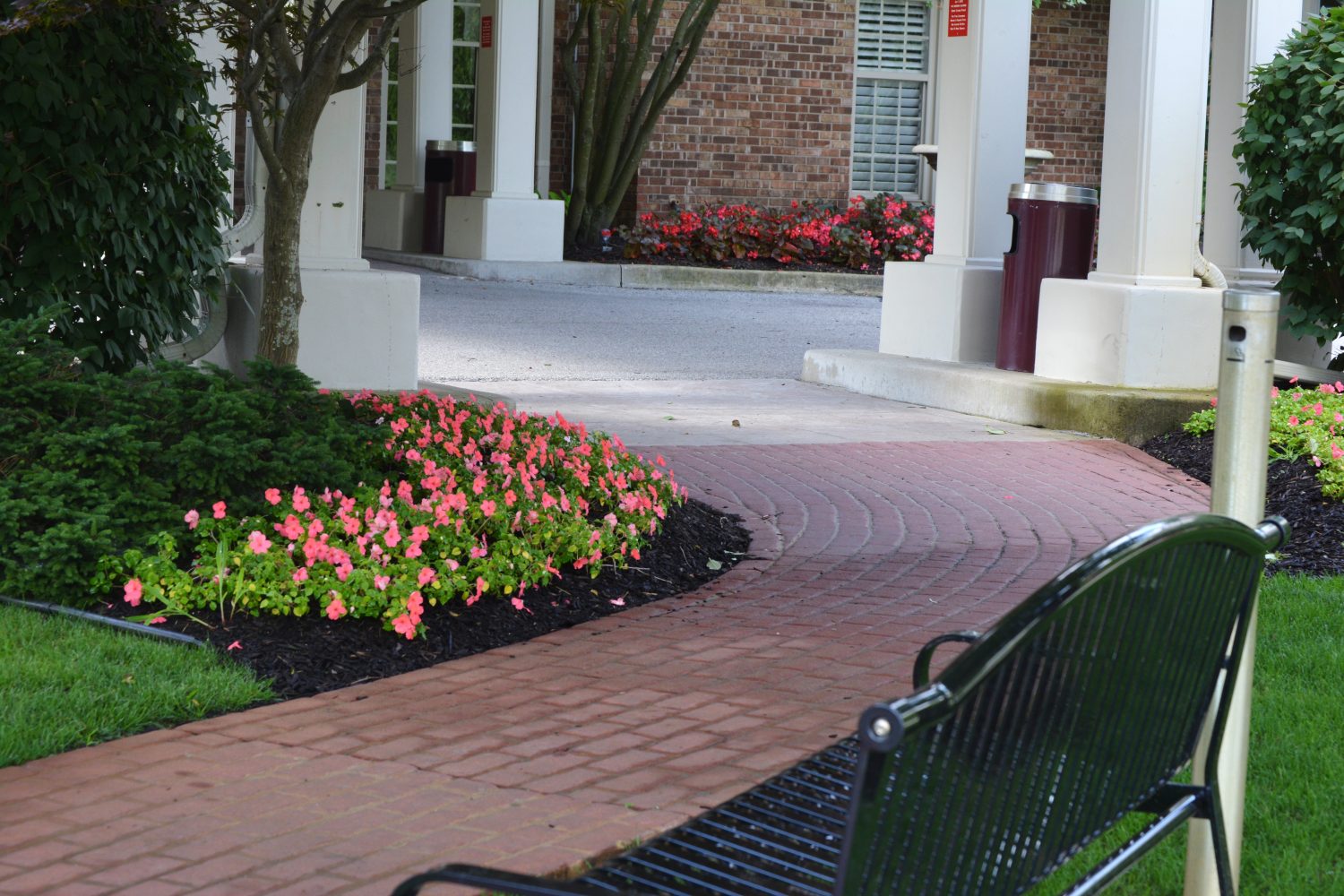
The First Pass: Reading Winter Damage and Pulling Beds Out of Dormancy
The first pass on a property usually happens in the last week of March or the first week of April in East Central Indiana, depending on what kind of winter the property went through and when the ground thaws enough to hold work cleanly. The first pass is a read pass as much as it is a work pass.
We walk the beds before we touch them. We are looking for what survived the winter and what did not, which perennials need their old stems cut back to the crown and which ones already pushed new growth and need the cutback done above the green, where the salt damage from the road or the driveway shows up at the property edge, where windblown leaf matter settled into corners thick enough to need raking and where it is thin enough to leave alone. The walk decides which beds get worked first, which beds get a second visit two weeks later, and which beds are telling us a plant did not make it and the design needs to be patched before the rest of the season notices.
Then the work runs. Perennial and ornamental-grass cutbacks. Salt-damage areas flushed with water where the salt load is heavy enough to matter for the plant roots. Lawn surface debris pulled off so the lawn can breathe through the first warm days. Hardscape edges swept, joints checked for shifted polymeric sand, and pavers reseated where the plow caught them. A first-pass property at the end of the day looks groomed without yet looking finished. The finished look comes after the second pass.

The Second Pass: Lawn Restart, Mowing Setup, and the Mulch Window
The second pass lands two to three weeks after the first, usually mid-April through the end of the month depending on the season’s arc. The property has woken up enough that we can read it differently. Beds have new growth coming in. The lawn has greened up unevenly. The bare spots and the thin spots that the first pass could not see yet are now visible.
The lawn restart work happens here. The first mowing is set at a slightly tall height with a sharp blade, because cutting a lawn coming out of dormancy too short pulls more from the plant than it gives back. Aeration goes down if the lawn shows compaction signals from the previous summer. Overseed gets dropped into bare spots that are big enough to need it and small enough that the lawn around them will not outcompete the new seed. The first-application timing for the lawn treatment program coordinates with this pass. See lawn fertilization for the pre-emergent timing window that sits next to the cleanup work.
The mulch window opens here too. The first mulching application of the year lands on beds that are now cleaned out, edged back to their lines, and dry enough to hold the new mulch without trapping moisture against the perennial crowns. A property that gets mulched before the first pass is done has mulch on top of last fall’s debris. A property that gets mulched too late has weed pressure that started in the bed before the mulch suppressed it. The second pass is when the cleanup hands off to the mulching window cleanly.
The second pass usually finishes the property. Some properties need a third quick visit to catch what the second pass surfaced. The decision is made on the second pass, not in the office.
Why the Calendar Window Is Narrow and Why Most Years Have Only Two Good Weeks
The calendar window for the right spring cleanup is narrower than most homeowners realize. Too early and the ground is still frozen or saturated enough that the bed work compacts the soil and the foot traffic on the lawn leaves rutting. Too late and the lawn has already started growing past its first-mow height and the pre-emergent window for crabgrass has closed.
The window opens in East Central Indiana somewhere between late March and the third week of April, depending on the winter that year. The window closes once the lawn is mowing every week on its own, typically the second week of May. The good-cleanup weeks inside that window are the two or three weeks when the ground is thawed but not soaked, the temperatures are warm enough for the work to hold, and the precipitation has not flooded the property the day before the visit.
Most years there are only two genuinely good weeks. The first pass has to land in one of them. The second pass has to land two to three weeks later, which usually puts it in the second genuinely good window. A service that runs a fixed-route, calendar-only cleanup schedule will catch one of those windows and miss the other. A service that runs the cleanup on read-the-property cadence will catch both, even if the dates shift week to week across the route.
That difference is what the homeowner is actually paying for. The leaf blower and the spreader and the rake are not the service. The decision about which week to be on which property is the service.
Frequently Asked Questions
What is included in a spring landscape cleanup?
A spring cleanup gets a property ready for the growing season: clearing leaves, fallen branches, and winter debris; cutting back perennials and ornamental grasses left standing over winter; edging and refreshing beds; a first-round weeding; pruning where appropriate; and often a fresh layer of mulch. In East Central Indiana it is the reset that turns a tired, winter-worn yard into a clean foundation for spring growth. It is frequently the first service of a recurring maintenance season.
When should spring cleanup happen in East Central Indiana?
Generally early to mid spring, once the snow is gone and the ground has dried enough to work without compacting it, typically March into April depending on the year. Timing matters: cutting back perennials and clearing beds is best done as growth is just beginning, and getting pre-emergent down at the right moment helps control weeds for the season. Scheduling the cleanup at the right window sets up everything that follows.
Why is spring cleanup important?
Because it protects plant health and sets the tone for the whole season. Matted leaves and winter debris left on beds and lawn trap moisture and invite disease and pests; old perennial growth left too long can smother new shoots. A proper cleanup clears that, lets light and air reach emerging growth, and reveals any winter damage that needs attention. It also makes every later service easier, because the property starts the season from a clean, healthy baseline.
Should I refresh mulch during spring cleanup?
Spring is one of the two prime windows for mulch, so it is commonly done as part of the cleanup. Fresh mulch suppresses weeds, holds moisture through the coming Indiana summer, regulates soil temperature, and gives beds a clean finished look for the season. Doing it after the beds are cleaned and cut back, rather than piling new mulch on old debris, is what makes it both effective and attractive. The right depth matters; too much mulch can harm plants.
Can spring cleanup be a one-time service or only part of a plan?
It can be either. Many East Central Indiana homeowners book spring cleanup as a stand-alone service to get the property reset, while others have it as the first step of a full-season maintenance plan. As a one-time service it still delivers a clean, ready-for-spring landscape. As part of a recurring plan it flows into mowing, bed care, and the rest of the season with the same team that knows the property.
Schedule a Spring Cleanup Walk
Because that first warm Saturday of the season matters, the cleanup work is paid to land in the right week, not in the most convenient week for the route. A first walk does not cost anything. We walk the property, name what the winter did to it, and tell you when the first pass and second pass would fall on the calendar this year. Call (765) 717-3917 or request a quote. The conversation works whether the property is on an annual maintenance contract or whether this would be a one-off cleanup visit.